On this page
On this page
4 min read
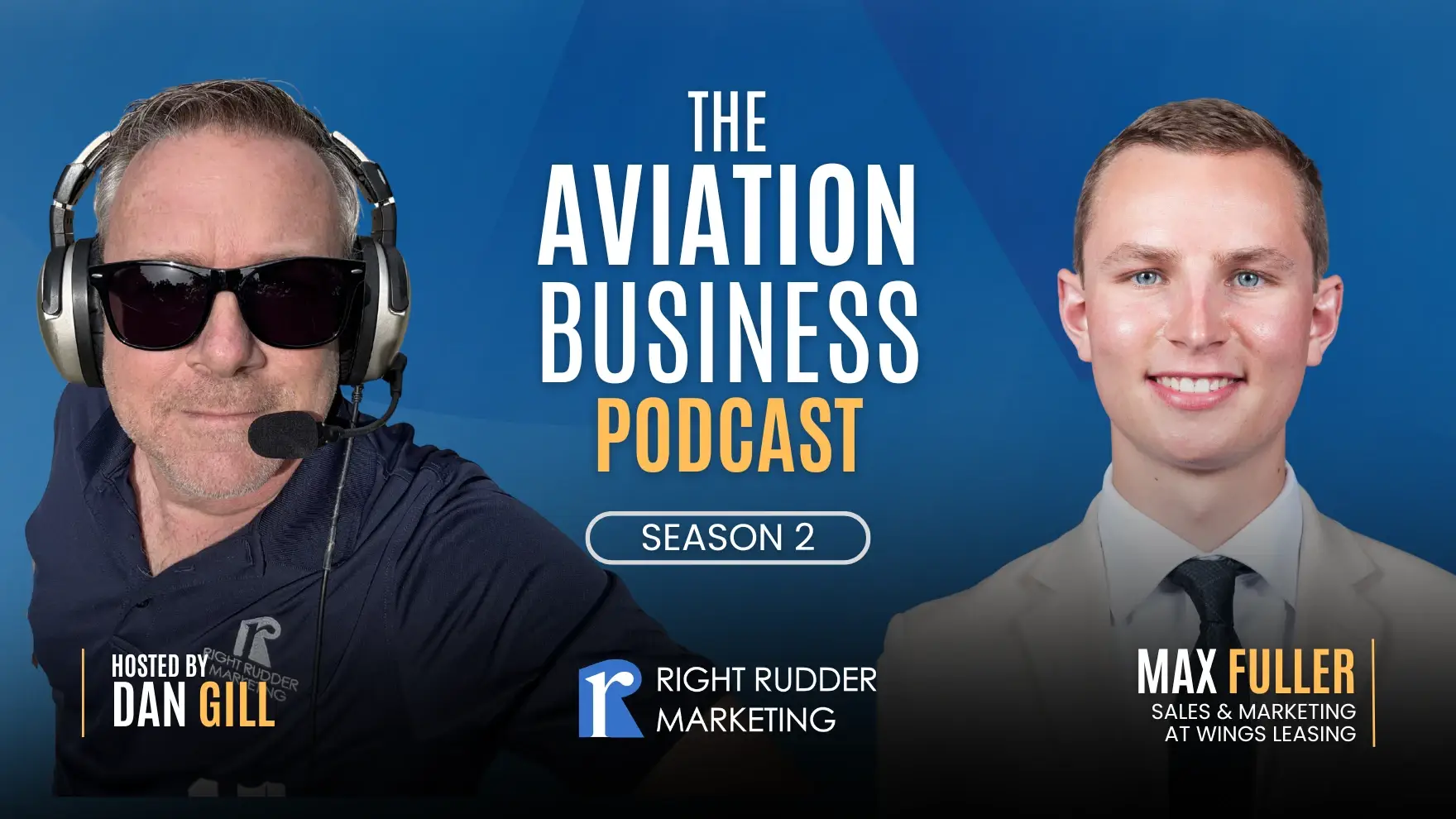
Most flight school owners think fleet growth is a capital problem. You need more aircraft, but you do not have the cash, and traditional lenders do not understand your business. In this episode of The Aviation Business Podcast, host Dan Gill sits down with Max Fuller of Wings Leasing to break down exactly how aircraft leasing works, why more schools are using it to grow, and what the numbers actually look like when you stop buying aircraft and start treating them like the financial assets they are.
Who Is Wings Leasing?
Wings Leasing is one of the largest aircraft leasing companies built exclusively for the flight training industry. They do not touch anything outside of general aviation aircraft used for flight training. That focus matters because their entire model is built around the economics of running a flight school, not the economics of running a commercial airline.
Wings launched in 2023 and has already built a portfolio of over 100 training aircraft spanning every major manufacturer: Cessna, Piper, Cirrus, Diamond, Tecnam, and various light sport aircraft. The company is growing at double-digit rates year over year. Their president and founder is Alan Goodnight.
The Problem With Buying Your Fleet
On average, roughly 50 percent of the global commercial aircraft fleet is leased. The largest airlines in the world do not own most of their aircraft. They lease them. That is not an accident. It is a deliberate capital strategy, and it applies just as directly to your flight school.
Buying aircraft ties up capital. A new Cessna 172 today costs over $700,000, and if you order one right now, you are looking at roughly a two-year wait for delivery. On top of that, many manufacturers require pre-delivery payments, which means you could be putting up a significant percentage of the purchase price before the airplane ever arrives on your flight line. That is a lot of capital locked up and unavailable for everything else your school needs.
Max made a point in this episode worth sitting with. Your business is training students. It is not managing assets. At a certain point, owning aircraft stops being a smart capital decision and starts being a drag on growth.
What Aircraft Leasing Actually Looks Like
A lease through Wings Leasing works similarly to a car lease. You pay for the operational right to use the aircraft. You handle insurance and maintenance. Wings handles the ownership and the capital structure behind it.
There are no punishing upfront requirements and no money down. Wings can close on lease terms in as little as 10 days. If you have ever tried to secure financing through a traditional lender, you know that timeline is not typical. Banks take weeks or months, and they often do not understand what a Part 141 or Part 61 flight school actually looks like as a business.
The leasing approach gives you access to the aircraft today. The tradeoff is straightforward: you do not build equity in the airplane. But if your school is flying a given aircraft around 50 hours a month or less, Max’s view is that your capital is better deployed elsewhere than sitting inside that asset.
How Sale-Leaseback Programs Work
If you already own aircraft, Wings Leasing offers something even more immediately useful: a sale-leaseback program.
Here is how it works. You sell your existing aircraft to Wings Leasing. Wings then leases those same aircraft back to you. Your flight line does not change. Training continues without interruption. But you walk away from the transaction with a cash infusion from the sale, which you can then put to work however your school needs it most: hiring CFIs, acquiring additional aircraft, funding marketing, or expanding your facility.
Aircraft values have appreciated significantly over the past several years. A lot of flight schools are sitting on equity in their fleet and have not moved to access it. The sale-leaseback is how you do that without giving up a single airplane or disrupting a single student’s training schedule.
Growing From 5 Aircraft to 10
Dan walked Max through a scenario in this episode that a lot of school owners will recognize. You have five aircraft. You have a line of students at your door. You can see the demand clearly for the next several years. What does it actually look like to expand your fleet using leasing?
Max’s answer was direct. Going out and purchasing additional aircraft means sourcing the market, sourcing the planes, and raising the capital, and that process is not something that wraps up in 24 hours. Leasing gives you access to aircraft fast. It is not unlimited, but it comes close. And it keeps the debt burden off your balance sheet so your school’s financial picture stays clean.
The constraint with leasing is equity. You will not own the aircraft at the end of the term. But for a school focused on throughput and student capacity, access beats ownership in most cases.
Why the Aviation Industry Makes This Urgent
Global commercial aviation grows at roughly 4 percent per year. Pilot demand is growing alongside it. The 1,500-hour rule means the pipeline from student enrollment to airline-ready pilot takes time, which means the schools producing those pilots need consistent fleet capacity now, not after a two-year manufacturing wait.
Max also mentioned FAA MOSAIC, which takes effect July 24th of this year, as one more example of how the regulatory and market landscape keeps shifting. Aviation does not sit still. Schools that can move quickly on fleet decisions are better positioned to capture demand than schools waiting on a bank approval or a manufacturer delivery slot.
About Max Fuller
Max did not grow up with aviation handed to him. He grew up in Indianapolis watching FedEx freighters depart at 5 in the morning with his dad. He always loved machines, but aviation stayed just out of reach until high school, when a connection through Chad Winings at Dassault Falcon helped him land a job at a local FBO doing line service. That is where the abstract interest turned into a real working understanding of how flight training and aircraft operations actually function.
Max went on to Embry-Riddle Aeronautical University in Daytona Beach, one of the most recognized aviation schools in the world. He studied the business side, not the pilot side, and found himself deep in courses on aircraft financing, airline structures, and capital markets. A textbook he found in the library introduced him to the concept that roughly half of all commercial aircraft in the world are leased. That idea stayed with him.
He eventually cold-emailed Wings Leasing founder Alan Goodnight from his dorm room, asking for a call to learn more about the business. Alan responded within 10 minutes. Max was almost late to class. He joined Wings as an intern and moved into a Sales and Marketing role working across lease origination, asset management, and daily operations. He is 20 years old. He turns 21 in June.
He is also studying real estate finance at Florida Gulf Coast University, with a clear focus on staying in aviation finance for the long term. His take on the job is useful for anyone who thinks aviation careers start and end in the cockpit: he sees aircraft as portable real estate, an asset with unique regulatory complexity, global transferability, and genuine financial depth that most people outside the industry never see.
Key Takeaways From This Episode
The buy vs. lease question is a capital allocation question. The answer depends on how much you are flying a given aircraft, what your growth goals are, and where else your capital could be working. It is not one-size-fits-all, but leasing deserves a serious look at most stages of flight school growth.
A new 172 costs over $700K and takes two years to arrive. For schools that cannot wait and cannot tie up that capital, leasing is not just a nice option. It is often the only practical one.
Sale-leaseback programs let you access fleet equity without disrupting operations. If your aircraft have appreciated and your school needs capital, there is a path to unlock it without selling a single student’s airplane.
Wings can close in 10 days with zero money down. Speed matters when student demand is real and you need aircraft on the flight line, not on an order form.
Aviation finance is a career path. Max’s story is a direct example. A background in real estate finance, structured finance, or asset management can take you deep into one of the most complex and dynamic asset classes in the world. You do not have to be a pilot to build a serious career in this industry.
Frequently Asked Questions
What is an aircraft lease for a flight school? A flight school pays a fixed amount to use an aircraft without owning it. The school handles insurance and maintenance. At the end of the lease term, the school can return the aircraft or in some structures extend or purchase. Leasing keeps working capital free rather than locked inside the asset.
What is a sale-leaseback and how does it work? A sale-leaseback is when a school sells aircraft it already owns to a leasing company, then leases those same aircraft back immediately. The flight line stays the same. The school receives the proceeds from the sale and can use that capital for hiring, expansion, or acquiring additional aircraft.
Is leasing better than buying aircraft for a flight school? Max’s framework from the episode: if your school is flying a given aircraft around 50 hours a month or less, leasing is likely the better capital decision. Ownership builds equity, but it also immobilizes capital that could be generating better returns elsewhere in your business.
How fast can a flight school close on a lease through Wings? Wings Leasing can close on lease terms in as little as 10 days. Traditional lenders typically take weeks to months. For schools trying to meet growing student demand quickly, that difference is material.
What aircraft does Wings Leasing work with? Wings works across all major manufacturers used in flight training: Cessna, Piper, Cirrus, Diamond, Tecnam, and various light sport aircraft. Their portfolio covers over 100 aircraft as of 2025 and continues to grow.
Capital Does Not Have to Be the Bottleneck
Student demand is real. The pilot shortage is real. If the only thing between your school and the next level of growth is fleet capacity, that is a solvable problem. Wings Leasing exists specifically to solve it. And if you want help making sure the students those aircraft bring through your doors actually find you, Right Rudder Marketing works exclusively with flight schools. We handle the marketing side so you can stay focused on training pilots.
Capital does not have to be the reason your school stops growing. The tools exist. The structures work. And companies like Wings Leasing are built specifically to make this accessible for training operators of every size. If you want to talk through how marketing fits into a growth strategy built on smart capital allocation, Right Rudder Marketing works exclusively with flight schools. We handle the marketing side so you can focus on training pilots.
Schedule a strategy call with our team. We will show you exactly what a full-funnel marketing system looks like for a school at your stage of growth.