On this page
On this page
7 min read
Your ramp is sitting quiet on Tuesday morning. Two instructors are available. Three aircraft are fueled and ready. But your calendar has nothing until Thursday.
That’s not an aircraft problem. It’s not an instructor problem. It’s a discovery flight problem.
Most flight school owners treat the discovery flight as a necessary expense — a courtesy offering they provide before getting down to the “real” business of training. But the schools filling their calendars and growing year over year see it completely differently. For them, the discovery flight is the product. Everything else is what happens after it converts.
This is the first post in RRM’s Discovery Flight Playbook series. Over the next seven posts, we’ll walk through everything — pricing, packaging, marketing, follow-up, CFI training, and KPIs — so you can build a discovery flight program that drives real enrollment. We start here: understanding exactly what discovery flights are worth.
What a Discovery Flight Actually Is (And Isn’t)
A discovery flight is a short, instructor-led introductory lesson. It’s typically 30 to 60 minutes of airtime, designed to give a prospective student their first hands-on experience in the cockpit. Flight schools call it different things — intro flight, demo flight, introductory flight. The FAA doesn’t have a formal definition. But every flight school knows what it is.
What it isn’t: a sightseeing tour. It isn’t a charity ride for the curious. And it definitely isn’t a marketing expense you tolerate so you can get to the profitable training hours.
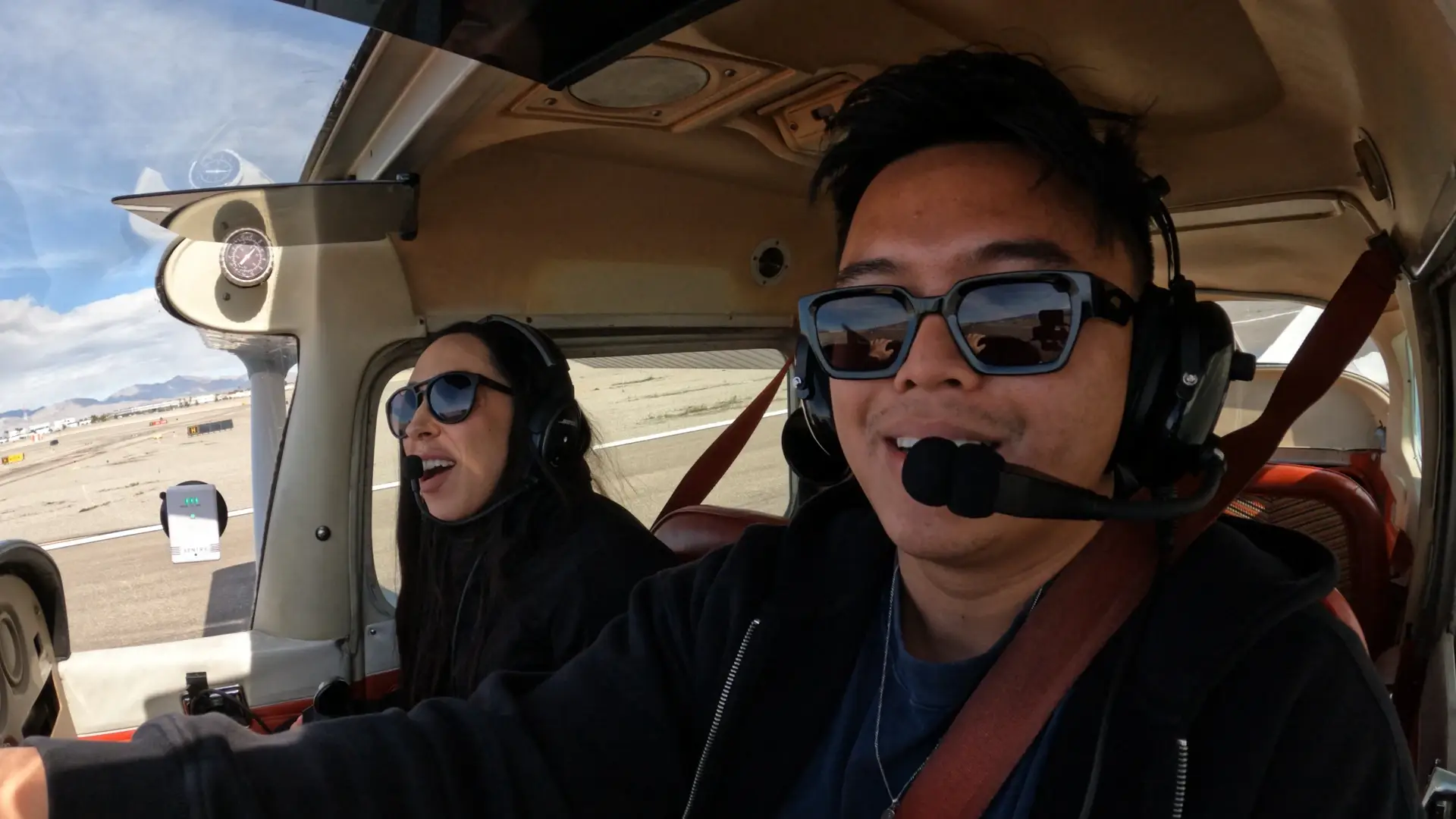
The discovery flight is the first step in official flight training. The time logged counts toward a student’s Private Pilot License (PPL) requirements. The moment a prospect climbs out of your Cessna after a 45-minute intro flight, they’re not a prospect anymore. They’re a student who has already begun their journey — whether or not they know it yet.
That framing shift changes everything about how you market it, price it, and run it.
The Numbers That Make the Case
Flight schools that optimize their discovery flight program consistently see 2 to 3 times enrollment growth within 12 months. That’s the pattern RRM has observed working with flight schools across the country.
Here’s why the math works. A single discovery flight might generate $150 to $250 in direct revenue. That’s not the number that matters. What matters is what happens next.
A student who completes a PPL program spends $15,000 to $25,000 at your school. Add an instrument rating and a commercial certificate and that number climbs past $60,000 in lifetime training revenue. Every discovery flight is a door to that.
Discovery flights also account for 60 to 80 percent of new student enrollments at high-performing flight schools. Not Google ads. Not your Instagram account. Not your website redesign. The discovery flight. Everything else in your marketing exists to get someone to book one.
Why Most Schools Underperform on Discovery Flights
The schools that struggle with discovery flights usually share one of three problems.
The experience is inconsistent. Different instructors run it differently. One CFI is engaging and enthusiastic. Another barely introduces themselves before heading to the plane. Without a standardized process, you’re gambling on which instructor the prospect gets — and whether they walk away wanting more.
The follow-up is weak or nonexistent. The prospect lands, says “that was amazing,” and walks off the ramp. They get a handshake and maybe a brochure. No email sequence. No next-step conversation. No one calls them for three days. By then, the excitement has worn off and the enrollment window has closed.
The marketing funnel stops at the booking. Schools run a Facebook ad, get a discovery flight inquiry, confirm the flight — and treat that as the end of the marketing job. In reality, that’s just the beginning. The conversion from flight to enrolled student is where the real work happens.
Fix these three things and your discovery flight program becomes a reliable enrollment engine instead of a question mark.
The Discovery Flight Funnel: A Quick Map
Think of discovery flights as the narrow neck of a funnel. Marketing lives above it. Enrollment lives below it.
At the top, your digital marketing drives strangers to your website. A percentage of those visitors inquire about flying. A percentage of those inquiries book a discovery flight. A percentage of those flights convert to enrolled students.
Every stage has a leak. Your job is to plug as many as possible.
Industry benchmarks for a well-run program look like this:
| Funnel Stage | Benchmark |
|---|---|
| Website visitor to inquiry | 5 to 10% |
| Inquiry to discovery flight booking | 20 to 40% |
| Discovery flight to enrolled student | 30 to 50% |
A school booking 20 discovery flights per month and converting at 30 percent signs up 6 new students. At an average PPL spend of $18,000, that’s $108,000 in new training revenue every month — from a single, well-run program.
The math rewards the schools that take this seriously.
What This Series Covers
The Discovery Flight Playbook gives you a complete operational and marketing framework for your intro flight program. No fluff. No generalities. Each post covers one piece of the puzzle:
Post 2 covers pricing — how to set a price that covers your costs, signals value, and doesn’t drive away serious students.
Post 3 covers the experience itself — what to include, which add-ons actually move the needle, and how to standardize without making it feel robotic.
Post 4 covers the marketing funnel — how to drive qualified discovery flight bookings using SEO, Google Ads, social media, and your website.
Post 5 covers the post-flight email sequence — the exact follow-up rhythm that keeps prospects warm and converts flights to enrollments.
Post 6 covers CFI training — how to build a team of instructors who close, not just fly.
Post 7 covers KPIs — which numbers to track, what benchmarks to aim for, and how to diagnose problems in your funnel before they cost you students.
Read one or read all seven. Either way, you’ll leave with something you can use today.
Frequently Asked Questions
Do discovery flight hours count toward a pilot certificate? Yes. Time logged during a discovery flight counts toward the aeronautical experience requirements for a Private Pilot License under FAR 61.109, as long as a certificated flight instructor conducts the flight. This makes the discovery flight the literal first step in a student’s training — not just a promotional ride.
How many discovery flights should my school do per month? There’s no universal answer, but a useful target for a small to mid-size school is 15 to 25 per month. That gives you enough volume to generate consistent enrollments while keeping quality high. Focus on conversion rate, not just raw volume.
What’s a good discovery flight conversion rate? Schools with strong follow-up systems typically see 30 to 50 percent of discovery flight participants enroll in a training program. Schools with no structured follow-up often see that number drop below 20 percent. The gap is almost entirely email automation and CFI sales training — both of which are fixable.
Ready to build a discovery flight program that fills your training calendar? That’s exactly what the rest of this series covers. Start with pricing — because getting that wrong undermines everything else you do.
🔗 [Read Post 2: How to Price Your Discovery Flight Without Leaving Money on the Table] → COMING SOON
If you’d rather skip straight to strategy and get RRM’s eyes on your current program, book a call. We’ll show you where your discovery flight funnel is leaking and what it would take to fix it.