On this page
On this page
10 min read
You have probably heard some version of “it takes a lot of money to start a flight school.” That is true. But vague answers do not help you build a business plan, secure financing, or decide whether this venture makes financial sense.
This post gives you the real numbers. Line by line, category by category, based on current industry data from AOPA and verified aviation business sources. By the end, you will know exactly what a flight school costs to launch, where most new owners underestimate, and which levers can cut your startup bill by 30 to 40 percent.
The Five Major Cost Categories
Every flight school startup budget breaks down into five core buckets. The ranges below reflect a modest single-location operation with a small fleet. Your exact numbers will vary based on your market, your airport, and your certification path.
Here is what the data shows:
| Expense Category | Estimated Range | What It Covers |
|---|---|---|
| Facility rental and modification | $125,000 to $250,000/year | Hangar, classroom, office space, buildout |
| Aircraft (per unit) | $150,000 to $500,000 | New Cessna 172 at the high end, used fleet at the low end |
| FAA compliance setup | ~$20,000 | Certification, documentation, curriculum development |
| Insurance (year 1) | $25,000 to $150,000+ | Hull, liability, student coverage. Scales with fleet size |
| Working capital | $50,000 to $150,000 | Fuel, instructor payroll, marketing, utilities, runway costs |
Realistic total range for a small operation: $370,000 to $1,070,000+.
That is a wide range on purpose. A two-aircraft Part 61 school in a low-cost market can launch closer to the bottom. A five-aircraft Part 141 program in a competitive metro area will push well past the top.
Let’s break each category down so you know where the money actually goes.
Aircraft: The Biggest Line Item on Your Budget
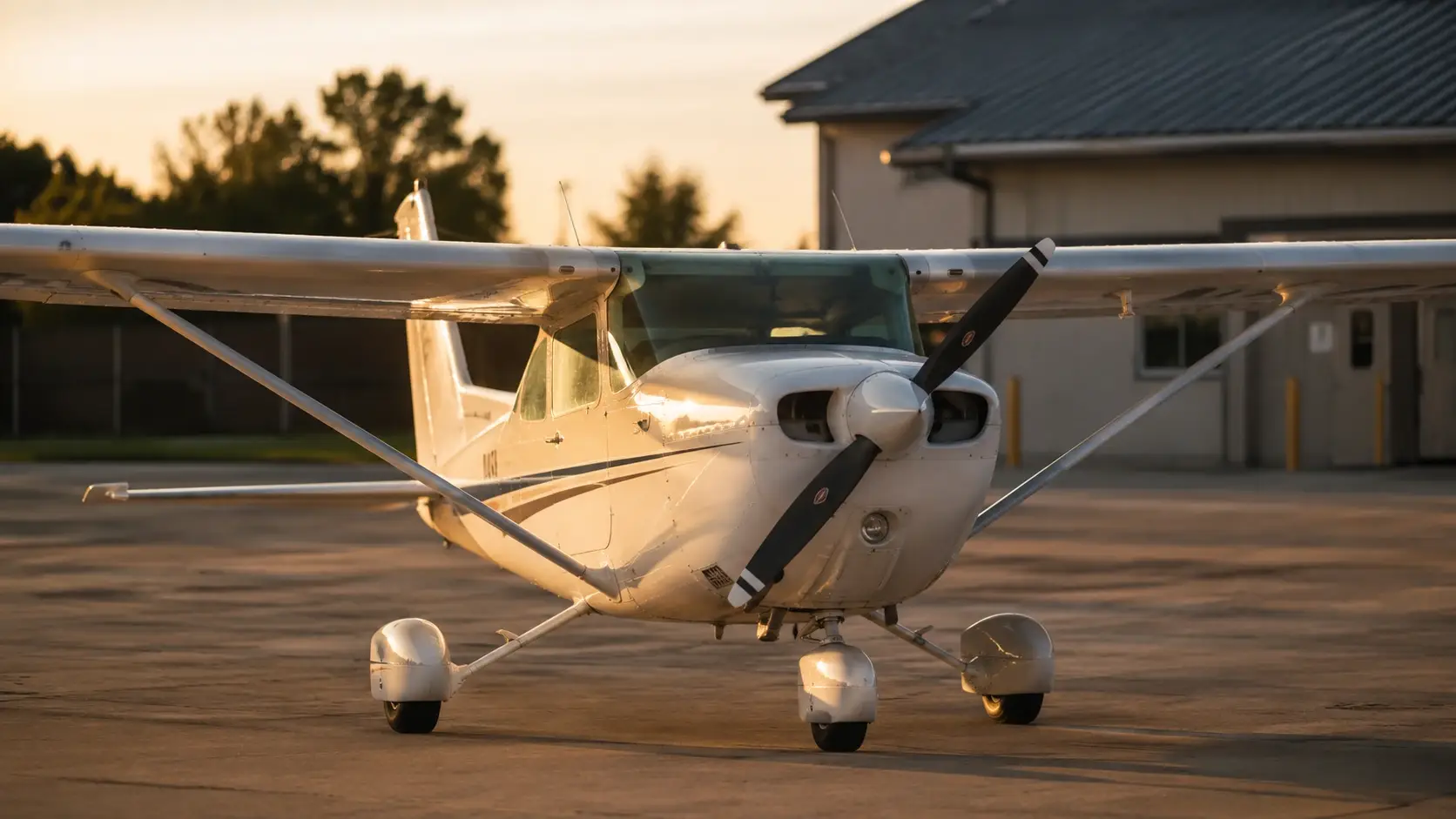
Aircraft will consume more of your startup capital than any other single category. A brand-new Cessna 172 Skyhawk runs roughly $480,000 to $500,000 in 2025 dollars. A well-maintained used 172 with updated avionics can land between $150,000 and $250,000.
Most new owners start with two to three aircraft. At the low end, that means $300,000 to $750,000 in fleet costs alone. At the high end, a five-aircraft fleet of new planes could exceed $2 million.
This is the line item where your lease-versus-buy decision has the biggest financial impact. Leasing can reduce your upfront aircraft costs by up to 40 percent. We cover that decision in full detail in a dedicated post.
🔗 [Post 2: Leasing vs. Buying Training Aircraft] - Coming soon
Facility: Hangar, Classroom, and Office Space
Your facility costs depend almost entirely on your airport and your region. A hangar lease at a small municipal airport in the Midwest might run $3,000 to $5,000 per month. The same footprint at a busy Class C airport near a major metro could cost $10,000 to $20,000 per month.
Beyond the hangar, you need classroom space, a front office, a briefing area, and room for students to study and debrief. Many new schools lease existing FBO space or share facilities with other operators to keep costs down.
Budget $125,000 to $250,000 per year for your first year, including any buildout or modification needed to make the space functional for training.
FAA Compliance and Certification
This is the smallest line item on the list, but do not let the number fool you. The roughly $20,000 covers your initial FAA certification paperwork, operations manual development, and curriculum documentation.
For a Part 61 school, this process is relatively straightforward. You need a chief flight instructor (CFI) and the standard operating paperwork.
For a Part 141 school, the requirements increase significantly. The FAA will review your training syllabus, facilities, instructor qualifications, and record-keeping systems. The approval process can take six months or longer, and many schools hire a consultant to manage it.
Insurance: The Cost That Scales With Everything
Flight school insurance is not one policy. It is a stack of coverages: aircraft hull insurance, liability insurance, student pilot coverage, premises liability, and potentially workers’ compensation for your instructors.
A two-aircraft school might pay $25,000 to $40,000 in year-one premiums. A five-aircraft operation with multiple instructors can exceed $150,000.
Your claims history, your fleet’s age, your training record, and your instructors’ experience levels all affect your rates. Schools with strong safety records and documented training protocols get better pricing over time.
Working Capital: The Budget Line That Keeps the Lights On
Working capital covers everything that does not fit into the categories above. Fuel. Instructor payroll. Marketing. Utility bills. Software subscriptions. Supplies. The expenses you pay every month whether or not a student books a flight.
Most industry advisors recommend budgeting $50,000 to $150,000 in working capital for your first year. This is separate from your facility, aircraft, and insurance costs.
This is the category that gets cut first when startup budgets get tight. It is also the category that determines whether your school survives its first year.
Where Most New Owners Underestimate
The five cost categories above are predictable. They show up in every flight school business plan template. The real risk sits in the gaps between them.
Marketing gets cut first, and it should be cut last. New owners routinely slash their marketing budget to cover aircraft maintenance surprises or facility buildout overruns. The result is predictable: the school opens, the hangar looks great, the aircraft are airworthy, and nobody knows the school exists. Enrollment trickles. Cash flow tightens. The marketing budget gets cut again. The spiral continues.
The flight schools that fill seats in their first year budget for marketing from day one, not as an afterthought. That means allocating $2,000 to $5,000 per month minimum for digital marketing, a professional website, Google Business Profile optimization, and lead generation ads.
🔗 Flight school marketing system
Instructor payroll is more expensive than the hourly rate suggests. A good CFI earns $25 to $50 per flight hour, but you also pay them for ground instruction, briefings, lesson prep, and downtime between students. If you want full-time instructors (and you should for consistency and student retention), expect $40,000 to $65,000 per instructor per year in total compensation.
Maintenance costs are never zero. Aircraft break. Annuals cost $5,000 to $15,000 per aircraft. Unscheduled maintenance can double that in a bad year. Budget for it, or it will eat your working capital.
Cost Reduction Levers That Actually Work
The total startup range of $370,000 to $1,070,000 is real. But it is not fixed. Three proven strategies can bring your costs down significantly without compromising the quality of your operation.
Lease Your Fleet Instead of Buying
Leasing aircraft instead of purchasing outright can reduce your upfront capital requirements by up to 40 percent. You trade equity for flexibility: lower upfront costs, predictable monthly payments, and the ability to scale your fleet up or down as enrollment changes.
This is especially powerful for new schools testing a market. If enrollment exceeds your projections, you add aircraft. If it falls short, you are not stuck with depreciating assets and loan payments on planes that sit in the hangar.
🔗 [Post 2: Leasing vs. Buying Training Aircraft] - Coming soon
Start With a Limited Fleet
Starting with two to three aircraft instead of five can save up to 30 percent on your total startup costs, and leasing some of them instead of buying can cut the upfront number further. Fewer aircraft means lower insurance premiums, lower maintenance costs, and less hangar space.
The trade-off is scheduling capacity. With a small fleet, you need to run a tighter schedule and may need to turn students away during peak demand. But that is a better problem than owning five planes and struggling to find students to fill them.
Pursue Federal and State Grants
This is the most underutilized cost reduction lever in flight school startups. Federal and state grants for aviation education programs range from $50,000 to $200,000 and can cover up to 70 percent of qualifying expenses.
These grants exist because the aviation industry is facing a well-documented pilot shortage, and federal and state governments recognize that training capacity is part of the solution. Most flight school owners never apply because they assume they do not qualify. Many of them are wrong.
🔗 [Post 4: Federal and State Grants for Flight Schools] - Coming soon
Part 61 vs. Part 141: How Your Certification Path Changes the Cost Structure
This decision affects your startup costs, your operating costs, and your students’ ability to pay for training. It deserves its own section.
Part 61: The Lean Startup Path
A Part 61 school operates under the general regulations that govern all flight training in the United States. You need qualified instructors, airworthy aircraft, and standard record-keeping. The barrier to entry is low, and the startup costs are lower.
Part 61 gives you flexibility in how you structure your training. You can tailor lesson plans to individual students. You do not need FAA-approved syllabi or standardized stage checks.
The downside: your students cannot access federal student loans through your program. That limits their financing options and, by extension, your addressable market.
Part 141: The Institutional Path
A Part 141 school operates under a more structured framework. The FAA approves your training curriculum, your facilities, and your instructor qualifications. The certification process is longer and costs more upfront.
But Part 141 certification unlocks something Part 61 cannot: eligibility for federal student loans at 5 to 6.53 percent interest rates. For students pursuing a Commercial Pilot License (CPL) that costs $80,000 to $100,000, federal loans are often the most affordable financing option available.
The Marketing Implication Most Owners Miss
Here is where this decision connects directly to enrollment. Part 141 schools can put “federal financial aid eligible” on their website, in their ads, and in every sales conversation. That phrase removes the biggest objection most prospective students have: “I can’t afford this.”
Part 61 schools can still thrive, but they need to work harder on the financing conversation. They need to present alternative financing options clearly on their website and train their enrollment team to address cost objections confidently.
Either way, how you present financing on your website matters more than most owners realize.
🔗 [Post 5: Why Your “How to Pay” Page Is Your Most Important Sales Tool] - Coming soon
Frequently Asked Questions
Can I start a flight school with $200,000?
Technically, yes. Practically, you will need to lease your aircraft, share facility space, start Part 61 only, and run an extremely lean operation. You will also need to generate revenue quickly. A $200,000 startup is possible, but it leaves very little margin for error and almost no room for the marketing investment that drives early enrollment.
What is the most expensive single line item?
Aircraft. Always. Whether you buy or lease, your fleet represents the largest single capital commitment in your business. A two-aircraft purchase can cost $300,000 to $500,000. A two-aircraft lease arrangement will be significantly less upfront, but still your biggest ongoing expense.
How long does it take for a flight school to break even?
Most well-marketed flight schools reach break-even within 12 to 24 months. The variable is enrollment velocity. Schools that invest in marketing from launch and build a consistent pipeline of discovery flight bookings and student enrollments reach profitability faster. Schools that rely on word-of-mouth and walk-ins typically take longer.
Build Your Flight School on a Real Budget, Not a Guess
Starting a flight school is a six- to seven-figure commitment. The numbers are significant, but they are knowable. Every line item in this breakdown is something you can plan for, negotiate, and optimize.
The schools that launch successfully do not just know their costs. They know their market, their positioning, and their enrollment strategy before they sign a lease or buy their first aircraft.
Right Rudder Marketing works exclusively with flight schools. If you are planning your launch, refining your business plan, or stuck in the early growth phase wondering why the students are not showing up, we can help. We build the marketing systems that fill seats.
🔗 Book a free strategy call with RRM
More in This Series
This is part 1 of the The Flight School Money Guide series, written to be read in order.
- Cost to Start a Flight School: A Line-by-Line Breakdown. You are here.
- Leasing vs. Buying Training Aircraft: The Real Math. Lease, buy, or leaseback: the cash flow, tax, and utilization math behind your training fleet.