On this page
On this page
4 min read
Skip the search. Here are the MOSAIC questions flight school owners bring to Right Rudder Marketing most often, answered straight, with no regulatory jargon and no overpromising. Bookmark this page and send it to any owner on your team still catching up on what changed.
Eligibility and the Medical Question
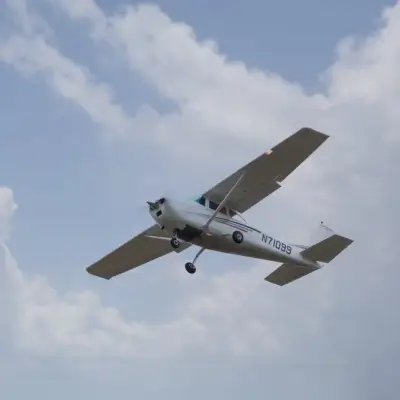
Can a sport pilot fly a Cessna 172? Yes, as long as the specific airplane’s clean stall speed is 59 knots calibrated airspeed or below, which the FAA has confirmed the 172 generally meets. The pilot still carries only one passenger, even though the airplane seats four.
Does the driver’s-license medical work for everyone? No. It covers day VFR flying for most pilots, but anyone whose most recent FAA medical certificate was denied, revoked, or suspended cannot use it. That exclusion is worth stating clearly in your own marketing so prospects understand it upfront.
What other airplanes typically qualify besides the 172? Many Piper Cherokees, the Cessna 150 and 152, and several Diamond models generally clear the 59-knot threshold, though stall speed can vary by model year and equipment. Check each specific tail number rather than assuming based on the aircraft family.
Cost and Timeline Questions
How much does sport pilot training cost compared to private pilot training? Industry estimates place sport pilot training in the range of $5,000 to $8,500, compared to roughly $12,000 to $18,750 for a private pilot certificate. These are current market estimates rather than official FAA figures, so treat them as a planning range.
Do sport pilot hours count toward a private pilot certificate later? Yes. All flight hours logged toward a sport pilot certificate count toward a private certificate if a pilot decides to continue training. This makes sport pilot training a legitimate, lower-cost entry point rather than a dead end for career-curious students.
Night Flying and Complex Aircraft
Can sport pilots fly at night now? Yes, but it is not automatic. A sport pilot needs three hours of night instruction, a 25 nautical mile night cross-country, ten night takeoffs and landings to a full stop, a logbook endorsement, and a valid FAA medical or BasicMed.
What about retractable gear and constant-speed propellers? Sport pilots can fly airplanes with these features after receiving training and an endorsement from a qualified instructor. Neither feature is available to a sport pilot by default.
Night Privileges Aren’t Automatic
It is worth repeating: night flying requires an actual medical, not just a driver’s license. This is one of the most common points of confusion in owner-facing marketing right now, so keep it explicit in your own materials.
Endorsement Training Is a Product, Not a Formality
Every one of these add-on privileges requires paid instruction time. Treat them as named packages on your website rather than assuming students will ask about them on their own.
New Aircraft and Standards Questions
When will new MOSAIC aircraft be available to buy? Realistically, 2027. The industry consensus standards manufacturers need were still pending FAA acceptance as of May 2026, and early movers like Tecnam are projecting first deliveries in early 2027.
What’s a consensus standard, and why does it matter? It is the technical rulebook, developed by an industry standards body and then accepted by the FAA, that manufacturers must build and test new aircraft against. No accepted standard means no legal path to certify and sell a new aircraft under the framework.
How to Start a Sport Pilot Program at Your School
Three steps cover most of what a school needs to launch this. First, audit your fleet for aircraft with a clean stall speed of 59 knots or below. Second, build a dedicated Sport Pilot page and pricing structure, separate from your general training page. Third, train your instructors on the new endorsements so retractable gear, complex propeller, and night training are ready to sell as soon as a student asks.
None of these three steps require a new airplane or a long runway to execute. Most schools can complete all three within a month.
Still Have a Question?
This page covers the questions we hear most, but MOSAIC has enough moving parts that new questions come up every week. If yours is not answered here, bring it to our July 30 webinar, where we are dedicating live time to owner Q&A after walking through the full operator’s playbook.
Schedule a free discovery call with Right Rudder Marketing if you would rather talk through your school’s specific fleet and situation directly. Either way, the answer to “should I be marketing this yet” is almost always yes.