

1-314-804-1200
Right Rudder Marketing flight school YouTube advertising
Flight School Paid Advertising

YouTube Ads for Flight Schools

The only channel that reaches someone before they know they are a buyer, and the only place you can answer the safety question at the length it deserves. It looks wasteful on a spreadsheet. Here is why it is not.

Three reasons a local school advertises to a national audience

The obvious objection to YouTube is that most of the people watching cannot fly with you. That is true, and it is still the wrong way to judge the channel. Here is why.

Search catches people who are already looking. YouTube reaches the person watching cockpit footage at 11pm who has never typed flight school into anything. That is a different job. It needs a different measure than a booking campaign.

There is a second reason to judge it differently. Almost nobody clicks a YouTube ad and books a flight that evening. They watch, they remember the name, and they search for you three weeks later. That search gets counted as organic or direct traffic. So the channel that started the chain gets none of the credit, and it looks worse in your reporting than it was.

A camera operator filming with a gimbal

The case for it

It extends your radius

This is the strongest argument and the least obvious one. Someone who has watched twelve of your videos will drive 90 minutes to train with you. Someone who found you in the map pack will drive 25.

Read that way, the wasted reach is not waste. It is what you are buying. A school in a thin market has two choices. Accept the ceiling its drive time sets, or spend on being worth a longer drive. YouTube is the most reliable way to do the second.
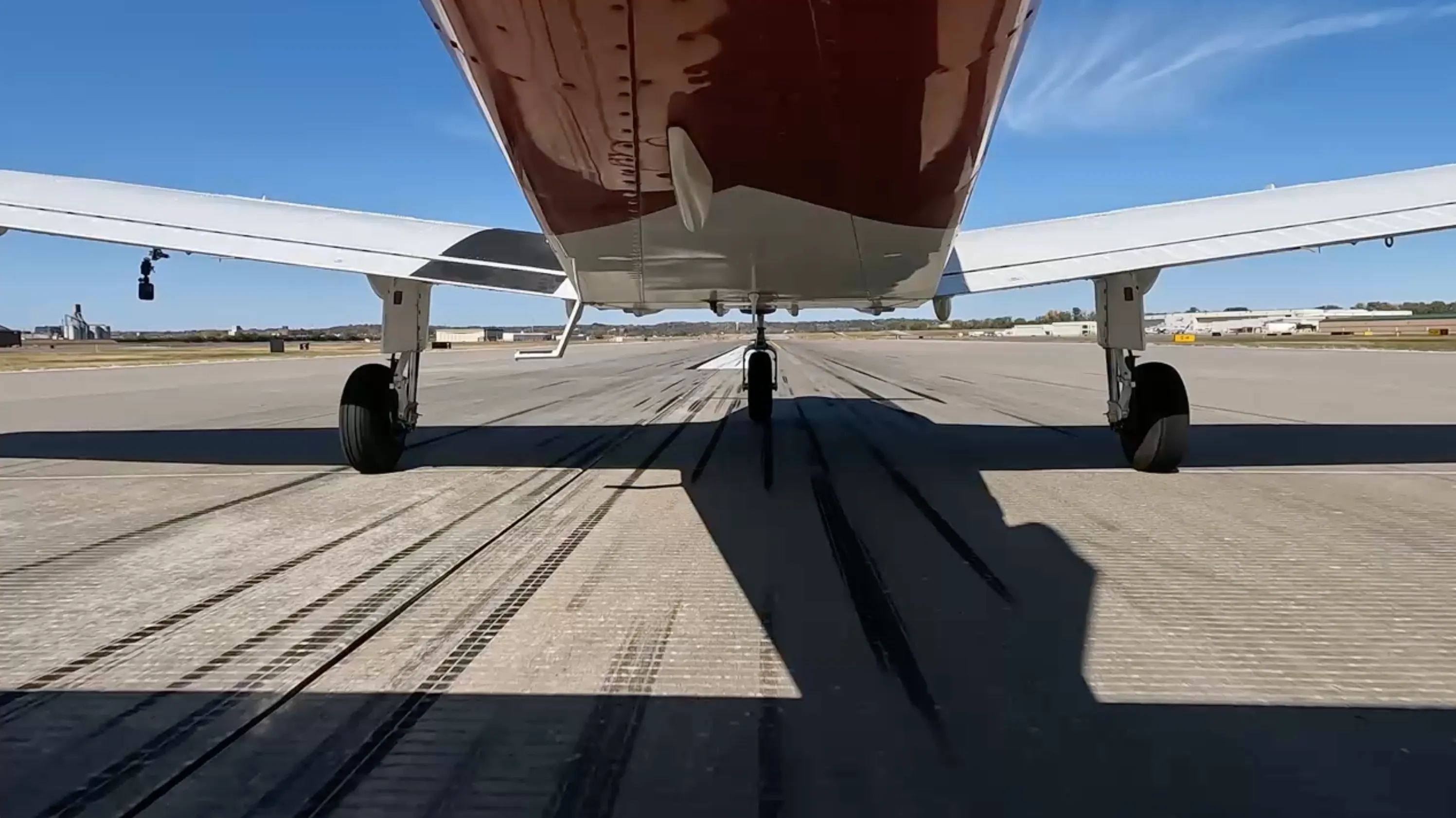
It is the only credible place to answer the safety question

Your buyer is deciding whether to trust you with their money, their calendar and their safety, all at once. A landing page cannot carry that weight. A named instructor on camera, answering the fear directly and without flinching, can.

When experienced pilots tell newcomers how to pick a school, they all point at the same tells. Maintenance culture. The state of the fleet. Whether the school follows a real syllabus. Those are the things worth filming, and they are the things a nervous buyer cannot judge from your website.

Saying safety is our number one priority is not evidence. A walkthrough of your maintenance hangar is.

What it costs

Short section, because the data here is thinner than anywhere else in the cluster and overselling it would be the wrong move.

Measure Range Where it comes from
Cost per thousand impressions$5.00 to $11.85Education vertical, vendor benchmark. Shorts sit at the low end.
Cost per view$0.027 to $0.10Two vendor sources that differ by roughly double. Both shown deliberately.
Click-through rateAbout 0.72%Education vertical, against a 0.65% cross-industry average.
Minimum budget for Demand Gen10x your target cost per acquisitionGoogle's own published guidance for target CPA bidding.

Those are vendor benchmarks with undisclosed samples, and they disagree with each other. Use them to size a test, not to forecast a result. We have not averaged the two cost per view figures. Averaging two numbers that differ by double gives you a third number that describes nothing.

So budget YouTube as a test with a clear question and an end date, not as a line item that quietly renews. The question is usually simple. Did discovery flight bookings rise in the area you targeted, compared with an area you did not?

Run it for a quarter at a level you can afford to lose. If bookings move, scale it. If they do not, you have spent a small amount to learn something real about your own market, which is worth more than a benchmark from somebody else's.

What to actually make

The media buy is worthless without the asset, and this is where most flight school YouTube spending fails. Not in the targeting, in the footage.

One disclosure first. There is no published research on what video works for education, or for any purchase people think this hard about. Everything measured in this space was measured on ecommerce. What follows is reasoned from how this buyer decides. It is not drawn from a study, and we would rather say so than dress it up.

Five things worth filming

The moment their hands are on the yoke

Not b-roll of an aircraft taxiing. The specific second a first-time student realises they are the one flying. That is the thing being sold, and almost nobody films it.

The student's face, not the paint scheme

Your aircraft looks like every other aircraft to somebody who has never flown. The person in the left seat does not.

A named instructor answering one specific fear

What happens if the engine quits. Whether being scared of heights disqualifies you. Whether you are too old. One question per video, answered by a person with a name and a face, at whatever length the answer honestly takes.

First solo and checkride day

The whole journey compressed into a story with an ending. These are the videos that get shared by the student, which is reach you do not pay for.

The maintenance hangar walkthrough

The single most persuasive video most flight schools could make and almost none of them do. Show the logbooks, the tooling, the person who signs the work off.

Two things to avoid, one of them regulatory

Stock aviation footage is the first. A nervous buyer wants proof that this school is competent. Stock footage proves nothing except that you have a budget line.

The second is anything that reads as a thrill ride. It converts worse with a cautious buyer. It also carries real risk, because framing a flight as a scenic ride can look like common carriage under Part 119. A school selling instruction and an operator selling sightseeing rides are different things to the FAA. Your ads should not blur the two.

One more tradeoff worth naming. Casual, phone-style video wears out in about 10 to 14 days. Studio work lasts 18 to 25. Those figures come from ecommerce, so treat the ratio as rough. Casual usually wins on cost and click-through rate, but you have to make more of it, more often. That is an argument for ongoing video production rather than one shoot. We would rather say that plainly than pretend one shoot lasts a year.

Questions owners ask about YouTube ads

Is YouTube advertising just brand awareness?

It is awareness that does a specific job, which is different from awareness for its own sake. Someone who has watched several of your videos will drive substantially further to train with you than someone who found you in the map pack. That is measurable as a widened catchment rather than as a click. It is also the only place you can answer the safety question at the length it deserves, and safety is what your buyer is actually deciding about.

Do I need professional video, or will phone footage work?

Phone footage works, and for some of the most persuasive material it works better. A student's face during their first landing does not need a cinema camera, it needs to be real. What phone footage costs you is longevity: casual creative fatigues in roughly 10 to 14 days against 18 to 25 for studio work, based on ecommerce data, so you need to make more of it more often. The choice is less about quality than about whether you would rather shoot a lot cheaply or a little expensively.

How do I know if YouTube ads are working if nobody clicks?

Not by watching the click-through rate, which will look poor next to search and should. Run it as a geographic experiment instead: advertise in one area and not in a comparable one, then compare discovery flight bookings between them over a defined period. Ask new students how far they drove and whether they had seen your videos. Watch your branded search volume. All of those measure the thing YouTube actually does, which the click column does not.

How much should a flight school spend on YouTube?

Google's guidance for Demand Gen campaigns with target cost per acquisition bidding is to budget at least ten times your target acquisition cost, which sets a realistic floor. Published cost figures for the education vertical range from $5.00 to $11.85 per thousand impressions, and the cost per view figures from different vendors differ by roughly double, so size a test against them rather than forecasting a result. We would rather a school get search and its Google Business Profile working first, then add YouTube when there is budget that is not needed elsewhere.

See whether video belongs in your marketing budget yet

Send us your URL. A real person goes through your website, your rankings, your Google Business Profile, and what happens after someone fills out your form.

  • Your full marketing audit, ranked worst to best
  • A 30/60/90-day action plan you can start Monday
  • A 12-month plan of exactly what we would do
Get Your Marketing Audit No cost. No call required.
Cover of the Six-Pillar Social Media System for Flight Schools Free system

The Six-Pillar Social Media System for Flight Schools

Where the footage goes after the shoot: the posting system that turns social attention into booked discovery flights.