On this page
On this page
4 min read
Stop Buying Airplanes. Start Buying Training Capacity.
Two 172s and a Warrior on the ramp. It’s July, your schedule is stacked, and three students just asked when you’re adding another airplane. So you start calling around to find one.
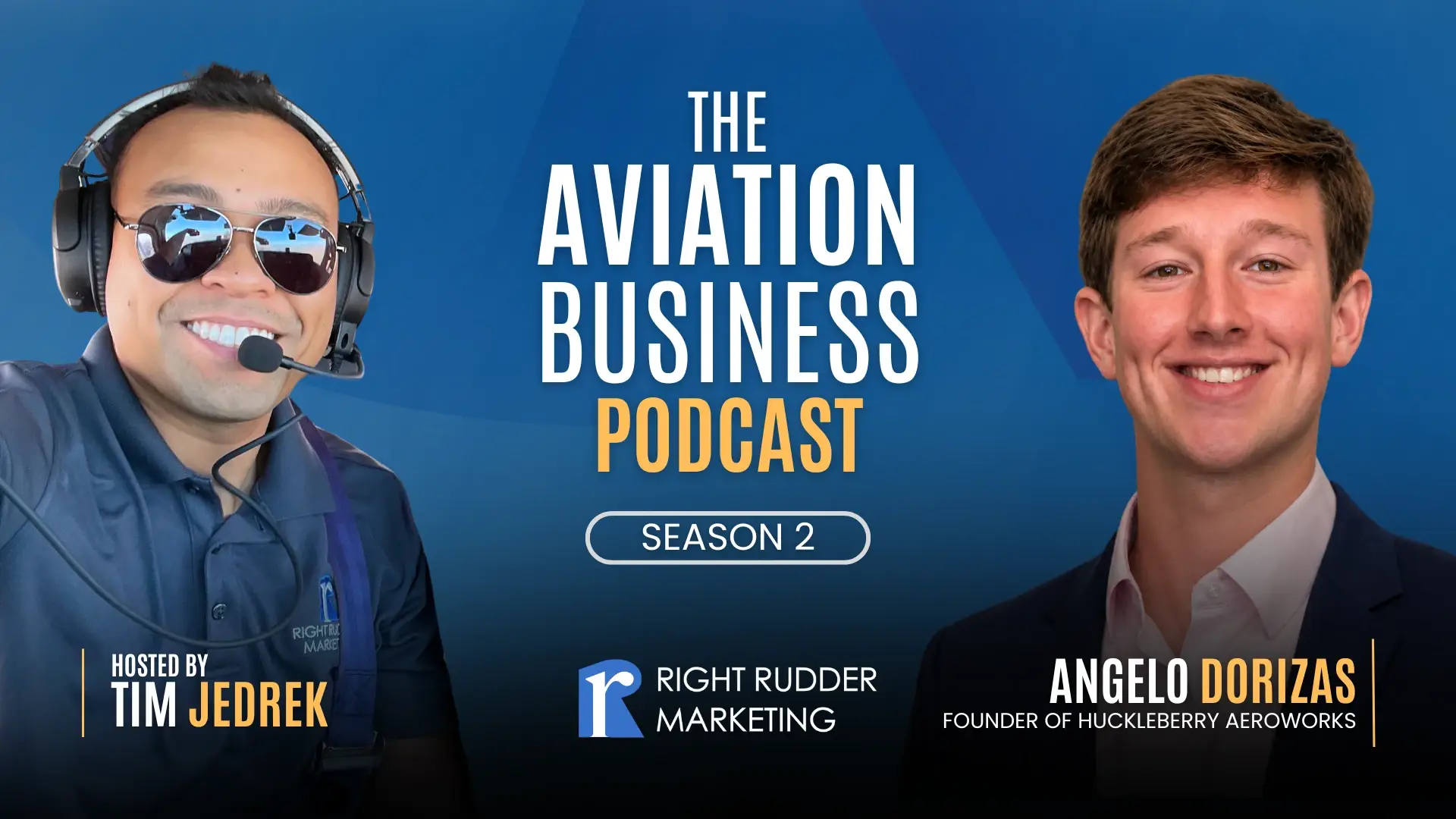
AJ Dorizas says that’s the wrong first move. He spent this week’s Aviation Business Podcast explaining why, and he came with numbers.
AJ ran operations at a flight school before he founded Huckleberry Aeroworks. Now he brokers aircraft leases for schools full time. Here is what he told Tim Jedrek.
The Real Enemy Is the Last-Minute Scramble
Most fleet decisions get made under pressure. A school suddenly needs multi-engine, so everyone starts rummaging around to find one.
AJ has a phrase for the alternative. Be ahead of the plane. It’s the same discipline you teach in the cockpit, applied to your fleet.
The trap isn’t the lease itself. AJ said the real problem is that flight schools get handed one-size-fits-all agreements and nobody explains the options. He was surprised more people don’t broker these deals, because the industry needs a middle layer and never built one.
What a Reactive Fleet Actually Costs
You pay last-minute prices for last-minute airplanes. Then you fight availability. AJ called it a cascade, and it all starts with skipping the fleet plan.
Mixed fleets carry a quieter cost. Tim laid it out on the show. Buy a P-Mentor, then an SR20, then a 172, then a Turbo Arrow that happened to be for sale, and now you’re running five systems. Your maintenance department hates you. Your parts inventory covers everything and nothing.
Your students pay too. They bounce between platforms and spend hours re-learning airplanes instead of building skill.
There’s a marketing cost most owners miss. AJ pointed out that your aircraft type shapes your brand identity. Whether you’re a Cessna school or a Cirrus school changes the students you attract and the way you sell yourself.
The Reframe: You’re Not Buying Airplanes
Here’s the line from the episode worth writing on your whiteboard.
AJ said the product isn’t aircraft. It’s training capacity. The question isn’t how many airplanes you need. It’s how many students you want to support and how many CFIs you want to employ.
He works the numbers backward from there. Instructor-to-student capacity. Aircraft-to-student. Aircraft-to-instructor. Hours per tail number.
Tim shared a school that proves the point. They dropped from about 20 aircraft to 15 after maintenance issues, and their hours per tail number jumped from around 80 a month to 150. Their training capacity held, because their instructors and their maintenance operation held.
Aircraft count is the number owners brag about. Capacity is the number that pays.
The Numbers AJ Shared on Air
This is where the episode earns its hour.
Under 40 hours a month, AJ says own the airplane. Low training capacity means you want the asset on your balance sheet, not a monthly obligation.
When demand spikes, lease. AJ described the school that suddenly needs three more airplanes yesterday. That’s leasing’s moment, because you can ride the demand wave without waiting on a purchase.
Top schools run 60/40 and 70/30. Those are the lease-to-own splits AJ says he sees at high-performing schools nationwide, with the bigger number being leased. Operating at scale is capital intensive, and cash sitting on the ramp can’t fight your hottest fire.
Pick your structure: hourly or fixed monthly. AJ framed it as choosing whether your lessor acts like a bank or like the IRS. Hourly flexes with your season. Fixed monthly costs more at the minimum but kills the administrative work of totaling hours every month.
His example: a fixed rate around $5,000 a month, versus a minimum near $4,200 plus roughly $90 per hour above it. Hourly limits your downside in a slow month. It also limits your upside when summer hits.
Past 30 airplanes, go fixed. AJ said the admin burden of hourly accounting gets extreme at that size. Fixed monthly moves your fleet from a variable cost to a fixed line item.
Small school, big lease payment? A brand new 172 can run around $7,500 a month. For schools that can’t carry that, AJ connects them with private aircraft owners using revenue shares and hourly structures borrowed from business aviation.
Here’s the honest part. AJ gets paid by the investor lessors, not by the schools, and he said so plainly on air. That makes his service free to you. It also means you should still run your own numbers before you sign anything.
Stay With Your Lessor
AJ’s strongest advice had nothing to do with airplanes.
Every lease payment builds relational equity with your investor lessor. Switch constantly and you burn it, the same way jumping insurance brokerages every year hurts your rates.
Stay put and the opposite happens. Your lessor learns your operation, gets comfortable with your risk, and your terms improve over time. He compared it to a long relationship with your banker.
His practical version: tell your lessor you’re ready for three more 172s in the next two quarters. Most of them are looking for a reason to buy.
What AJ Expects From MOSAIC
AJ sat on the ASTM F37 committee, the group that helps write light sport standards, so he watched this rule take shape from inside.
His verdict: a net positive in the long run, with a sharp cost for early adopters. Somebody has to go first, and going first costs more.
Ten years out, he thinks the training landscape looks very different. The open question is whether it runs on Rotax or on the new turbines coming to market.
He raised one caution owners should hear. A Rotax power band runs roughly 4,500 to 6,000 RPM. A legacy trainer runs closer to 2,000 to 3,000. A student who trains only on the former faces a real adjustment when they step into the latter for their first job.
His fleet guidance tracks utilization. Running 140 hours a month on career-track training? He’d still pick a modern metal trainer with a warranty and a record of surviving hard use. Flying 60 to 80 hours and want something premium but affordable? He pointed to light composite airplanes like the Diamond DA20 or Tecnam P-Mentor. Fighting density altitude? Sometimes only a Cirrus SR22T makes the mission work.
🔗 The all-RV-12 flight school: our episode with Hawkins Academy
Frequently Asked Questions
Should my flight school lease or buy aircraft? AJ recommends owning if you fly under 40 hours a month per airplane. Leasing fits schools scaling fast or riding a demand spike. Many high-performing schools run a mix, weighted toward leased.
What’s the difference between hourly and fixed monthly aircraft leases? Hourly payments flex with your utilization and protect you in slow months. Fixed monthly payments cost more at the minimum but remove the work of tracking and reporting hours. Schools operating more than 30 aircraft usually go fixed.
What does an aircraft lease broker do for a flight school? A broker matches your school with an investor lessor whose portfolio and manufacturer relationships fit the airplane you want. They help structure fair terms and stay involved as the relationship grows.
How much does it cost to lease a trainer? AJ cited roughly $7,500 a month for a brand new 172, and an example structure around $5,000 fixed or a $4,200 minimum plus about $90 per hour. Your numbers will vary by aircraft, structure, and lessor.
Go back to that ramp. Two 172s, a Warrior, and three students asking when you’ll add another airplane.
The owner who plans ahead of the plane doesn’t scramble for a tail number in July. They already know what capacity they’re building, which airplanes serve it, and who’s financing them.
AJ and Tim spent an hour mapping exactly how that works, including the lease structures and the numbers behind them.
Listen to the full episode of The Aviation Business Podcast with AJ Dorizas.