On this page
On this page
8 min read
Most flight schools fight the same battle. Students start strong, then stall out somewhere between solo and checkride. CFIs burn out chasing hours. Budgets blow up.
Saint Louis University has been working on that problem since 1927.
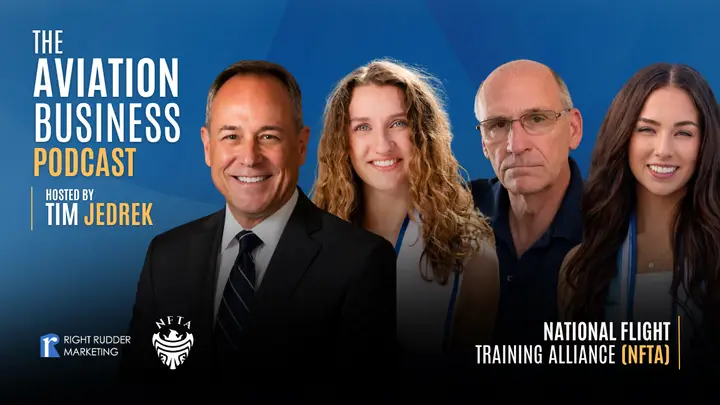
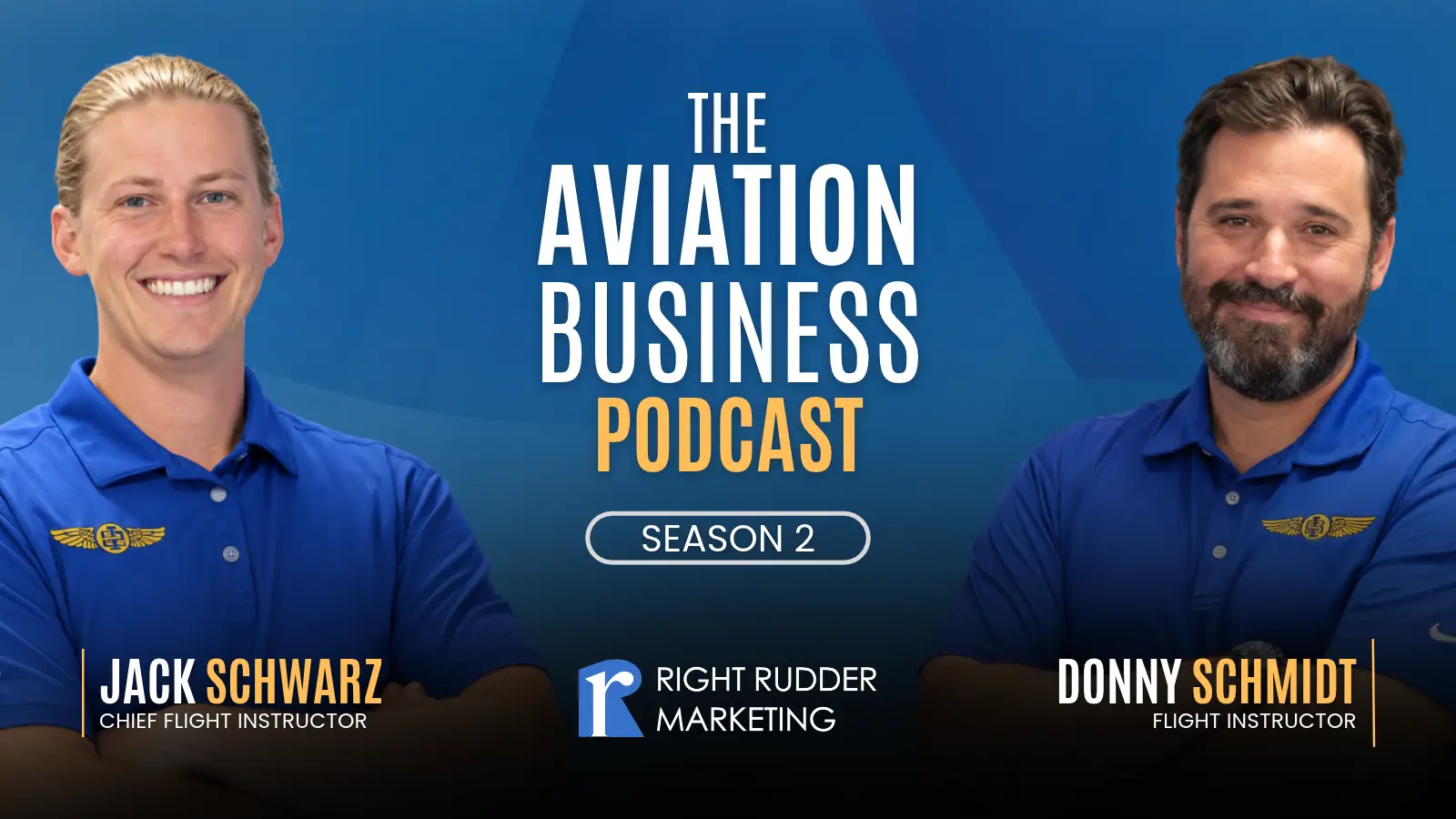
We packed up the gear and recorded this episode inside the SLU hangar at St. Louis Downtown Airport (KCPS). Our guests were Jack Schwarz, SLU’s chief flight instructor, and Donny Schmidt, a flight instructor. Both are faculty in SLU’s Department of Aviation Science. They walked us through the program’s history, how they keep students engaged, and why “checking boxes” is one of the most expensive habits in flight training.
If you run a flight school, this conversation hits on retention, CFI culture, fleet choices, and safety. Here’s what stood out.
Episode highlights
A program built by Oliver Parks in 1927
SLU’s aviation program started as Parks Air College, founded by Oliver Parks in 1927. It grew big enough to train pilots for World War II. Later, Parks donated the program to Saint Louis University.
According to the guests, the program holds FAA flight school certificate No. 1. That makes it the first federally certificated flight school in the country.
Next summer, the program celebrates 100 years of flight education. Plans include a Saint Louis University art museum installation of historical memorabilia and old airplanes, work from famous alum Gene Kranz (the former NASA flight director), and a hoped-for presence at EAA AirVenture Oshkosh.
Small on purpose
SLU keeps its incoming classes at about 50 students. The whole program usually runs around 150 to 160 students.
That size is a choice, and it pays off in three ways:
- No aircraft shortages. Students aren’t fighting for one airplane a week.
- One-on-one instruction. Every flight lesson is one instructor, one student. Ground lessons are one-on-one too, unless students choose to pair up.
- Everyone knows everyone. Donny said every student in the program knows him by name, and he knows them. A student who is stuck on a topic can grab any instructor and get help.
What this means for your flight school: you don’t have to be the biggest school in your market. A smaller operation where students always get a plane, an instructor, and a familiar face can be your selling point.
“Enjoy the journey” is a retention strategy
We asked the guests how they fight the dropout problem so many schools face. Their answer wasn’t a system or a tool. It was a mindset.
Donny said the industry sells young students on the end result: the 737 seat, the four stripes, the airport walk. Then the day-to-day work of private, instrument, commercial, and multi starts to feel like a grind, and the goal “starts to lose some of its shine.”
His advice to students is simple. Love the airplane you’re flying right now. Get great at it. The next airplane and the next skill set will be just as exciting.
Jack shared that he struggled early in his own training until he grew into that curious mindset. Once he did, it made all the difference.
What this means for your flight school: if your marketing only sells the airline seat, your students may quit when the grind hits. Sell the journey, too.
CFIs who love teaching build hours faster
The same idea applies to instructors. Donny tells SLU’s CFIs that if they treat instructing as time building, it will feel like a grind. If they love helping new pilots grow, their 1,000 hours will “come before you even know it.”
He also said something every school owner should hear. Many former SLU instructors come back and say instructing at Parks was the best job they ever had.
Why checkbox training costs more
This was one of the biggest takeaways for school owners.
Donny described the student who says, “I can do this for $5,000,” then treats each lesson like a box to check. They show up to a stage check or checkride unprepared. They fail. Now they need extra flights to fix what they should have been practicing all along.
The result? That $5,000 budget doubles.
The guests also pointed to CFIs. An instructor chasing hours may push a student to fly in conditions beyond their skill, just to log time. At SLU, the rule is that the flight has to help the student learn. If it won’t, they don’t go.
What this means for your flight school: your CFIs’ attitudes become your students’ attitudes. A culture that puts the student ahead of the logbook protects safety and your reputation.
AI is a tool, not a pilot
Tim and the guests talked about the wave of AI products at Oshkosh this year, from debrief software to cockpit tools. Everyone agreed AI is here to stay.
The line they drew: use it as a “third hand,” but never hand over your decision making. As PIC, you still have to be the one who says, “No, you’re wrong.”
Students raised on automation need to learn the machine first
The guests noticed that many students have never had to deal with the mechanics of their own car. That makes 1950s and 1960s airplane systems harder to grasp.
One guest put it this way: unless you’ve learned the long division, you don’t know if the calculator is right. The team even jokes about an intro systems class where every student has to find a free lawnmower on Facebook Marketplace.
Donny’s must-read for student pilots: Zen and the Art of Motorcycle Maintenance.
The fleet: Diamond DA20, Piper Archer, Piper Seminole
SLU flies Diamond DA20s as primary trainers, Piper Archers for commercial and advanced avionics training, and Piper Seminoles for multi-engine.
The DA20 gets high marks. It glides well because of its motor glider roots, burns about six gallons an hour, and has held up to years of training. It’s also SLU’s only spin plane for CFI training. The downsides: it floats on landing, parts can be slow, and the bubble canopy is “brutal” in summer.
MOSAIC and access to aviation
Asked about MOSAIC, the guests kept it simple. More access to aviation is a good thing. Lighter, simpler, less expensive aircraft and ratings can open flying to more people.
Tim added that adoption will be slow on the pilot side. Schools need DPEs, CFIs, and programs willing to train sport pilots.
Stop gatekeeping the next generation
The guests closed with a message for experienced pilots. Sometimes older aviators tell students they don’t love flying “enough” if they don’t do it a certain way. That takes the joy out of it.
Donny’s reminder: the way someone comes to aviation and enjoys it may look different from yours, and it’s no less valid.
Parris added her own story. She came into the industry at SkyWest with no friends or family in aviation and felt intimidated at first. A great manager changed that. Her advice: if something sparks your curiosity, book a discovery flight or try a ground school. You’re never late to the party.
Notable quotes
“If you view this as a stepping stone, if you view this as time building, it’s gonna feel like a grind. If you love teaching… your thousand hours are gonna come before you even know it.” Donny Schmidt
“Love the airplane you’re flying right now. Get good and masterful at flying that airplane. And then the next airplane’s gonna be equally or more exciting.” Donny Schmidt
“Unless you’ve sort of learned the long division, you don’t know whether or not the calculator is doing the right thing.” Donny Schmidt
“You may not realize how many eyes are on you.” Jack Schwarz, on the responsibility of being a CFI
“That five thousand dollars that you were so worried about going over in the first place has now doubled itself.” Donny Schmidt
“The way somebody comes to aviation, the way somebody appreciates aviation might be different than my own. And it’s no less valid.” Donny Schmidt
“If it’s something that you love doing, then that’s enough for a Tuesday.” Donny Schmidt
About our guests
Jack Schwarz, Chief Flight Instructor, Saint Louis University Department of Aviation Science Jack knew he wanted to fly after watching Top Gun. A flight with a family friend before high school sealed it. He trained at the University of Illinois Urbana-Champaign, then found SLU through a friend while applying for flight instructor jobs around the Midwest. He now leads SLU’s flight department as chief flight instructor.
Donny Schmidt, Flight Instructor, Saint Louis University Department of Aviation Science Donny was born and raised in St. Louis. His mom worked at McDonnell Douglas and brought home posters and model airplanes. After earning a degree in another field and finding the work wasn’t for him, he came back to school, found SLU’s flight program through a Google search, and earned a second bachelor’s degree. He started working at SLU around the same time as Jack and now teaches as a faculty member in the Department of Aviation Science.
Connect
Learn more about Saint Louis University aviation: 🔗 https://www.slu.edu/science-and-engineering/academics/parks-aviation-science/faculty/index.php
Want to grow your flight school? Right Rudder Marketing helps flight schools across the country grow and scale. Talk to our team about what’s working for schools like yours. 🌐 https://rightruddermarketing.com 📞 314-804-1200
Want to be a guest on The Aviation Business Podcast? If you’re in the aviation industry and have a story to share, reach out through info@rightruddermarketing.com
Listen on YouTube, Spotify, and Apple Podcasts, and follow us on Facebook and Instagram.